Dubrovnik is not a city you simply visit, it is a place you experience step by step.
The moment you enter Old Town Dubrovnik, Croatia, you are stepping into a perfectly preserved world of stone streets, baroque architecture, and centuries of stories. At the heart of it all lies Stradun, the main street that connects the city from one end to the other.
This guide covers Old Town Dubrovnik on foot in two parts: walking Stradun and the streets behind it, and walking the City Walls that surround them, two different experiences, with different practical details, that most visitors combine into one day.
Quick Answer: A Dubrovnik Old Town walk typically covers Stradun and its hidden side streets at ground level, plus the City Walls above, a separate, ticketed 2 km loop around the entire Old Town. Most visitors do both in a single day.
Why Dubrovnik Old Town Is Best Explored on Foot
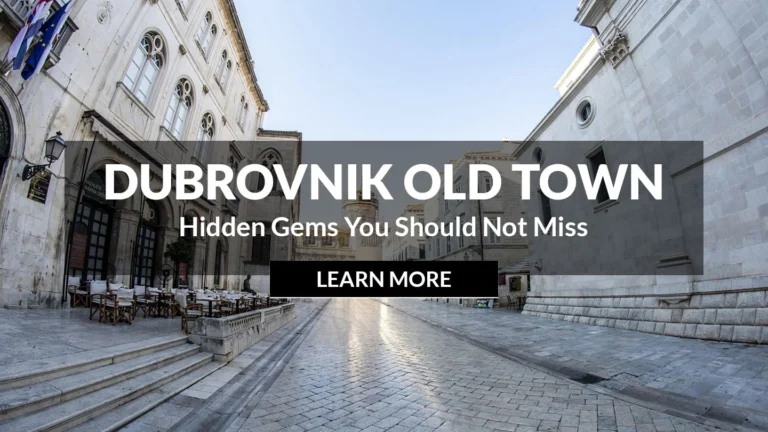
Unlike many European cities, Dubrovnik Old Town is completely pedestrianized. There are no cars, no traffic noise, only stone streets, footsteps, and centuries of history echoing through narrow alleys.
Walking allows you to discover hidden courtyards, explore side streets off Stradun, notice architectural details, experience local life, and reach the City Walls and viewpoints naturally.
This is why most visitors say Dubrovnik feels like an open-air museum. But it is more than that, it is a living city.
Quick Answer: Why walk Dubrovnik Old Town?
Dubrovnik Old Town is best explored on foot because it is completely pedestrian-only, allowing visitors to experience Stradun, hidden alleys, and historic squares without traffic distractions.
Walking Stradun and the Old Town Streets
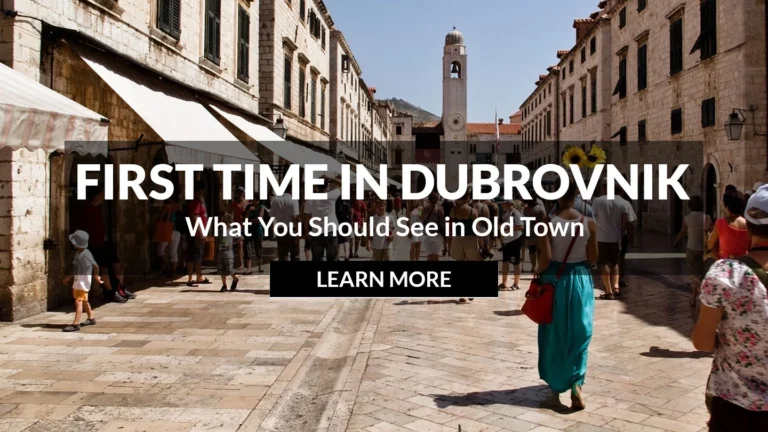
Your journey begins in Stradun, the wide limestone street that divides Old Town into two Stradun is more than just a street – it is the social and historical backbone of Dubrovnik.
Quick Answer: What is Stradun in Dubrovnik?
Stradun is the main limestone street in Dubrovnik Old Town that connects Pile Gate and Ploče Gate and serves as the central walkway for visitors and locals.
Narrow Streets and Hidden Alleys
Away from Stradun, you will find quiet stone alleys where laundry hangs above narrow passages, small cafés sit between centuries-old houses, and local life continues quietly behind the tourist paths. These are often the most authentic side of Dubrovnik, see our guide to the Old Town’s hidden gems for specific spots worth seeking out.
Churches and Small Squares
Old Town is filled with small squares that open unexpectedly between buildings, each with its own story, from religious heritage to trade history, back to the Republic of Ragusa that once rivaled Venice.
Quick Answer: Why are Dubrovnik City Walls important?
The City Walls are the defensive fortifications that protected Dubrovnik for centuries and now offer the best panoramic views of the Old Town and Adriatic Sea.
Walking It With a Local Guide
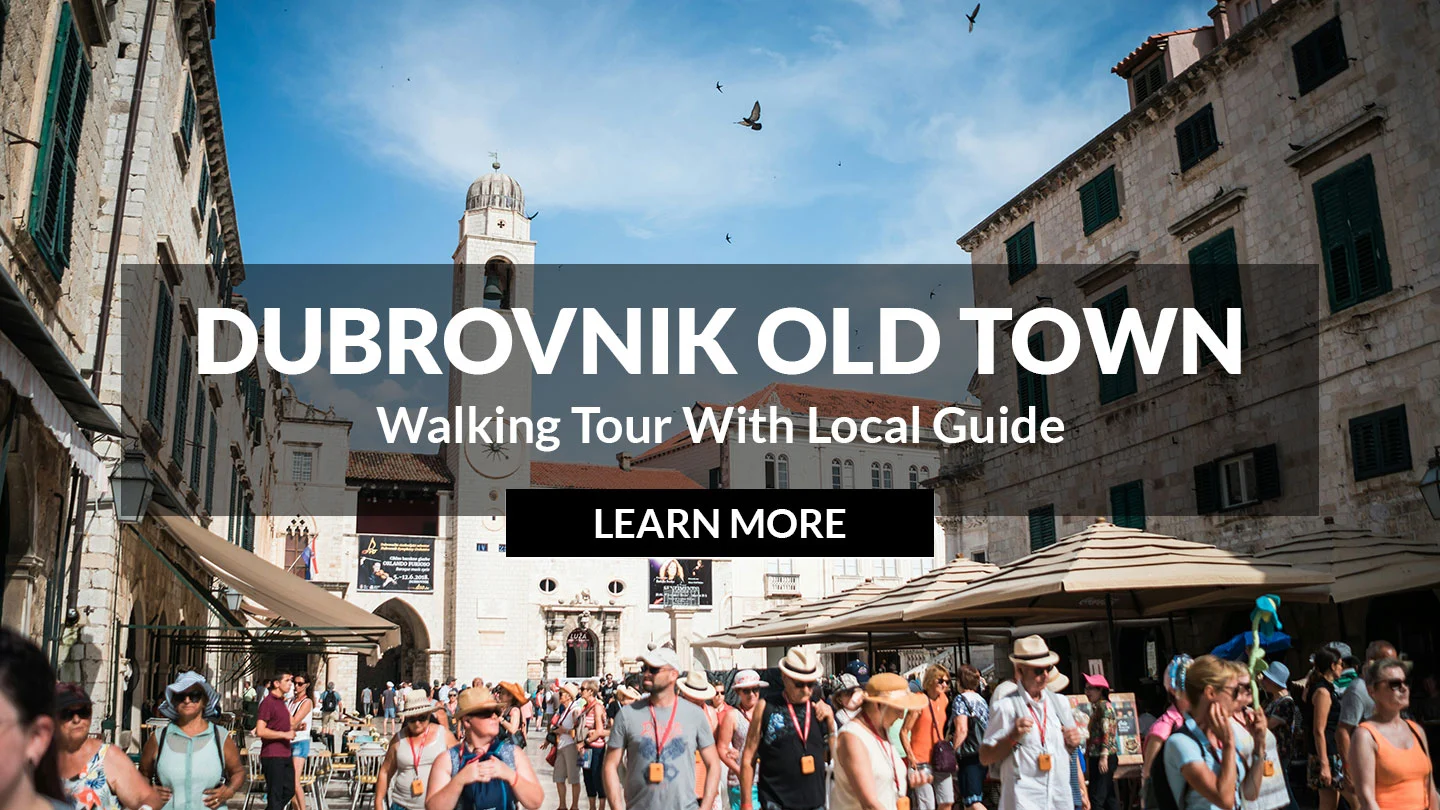
Instead of simply seeing landmarks, a guided walk through Stradun and the Old Town helps you understand why buildings were built a certain way, how Dubrovnik became a maritime republic, and what daily life inside the walls actually looked like. This is exactly what our Dubrovnik Old Town Walking Tour with Local Guide covers, a private, 120-minute street-level walk through Stradun and the Old Town’s hidden corners, priced per group rather than per person.
If you’re deciding whether to explore with a guide or on your own, we’ve written a full comparison: self-guided vs. guided Dubrovnik walking tours. This is one of three private local tours we run in Dubrovnik, the others cover panoramic viewpoints and the Konavle wine region, if you’re staying long enough to fit more in.
Walking the Dubrovnik City Walls

Once you’ve explored Stradun and the streets behind it, most paths naturally lead you toward the Dubrovnik City Walls, a separate, ticketed attraction and one of the most unforgettable walks in the Mediterranean.
These walls aren’t just a landmark — they’re the reason Dubrovnik survived for centuries, built to protect the Republic of Ragusa as one of the most advanced defense systems in Europe. From above, you’ll see the red rooftops of Old Town, the Adriatic Sea, nearby forts and towers, and the surrounding islands and coastline.
City Walls Tickets, Hours & Practical Tips (2026)
Price: around €40 for an adult ticket in peak season (March–November), lower in winter months. Prices are set by the city and can change — always confirm on the official City Walls website before you go.
Hours: typically 8:00 AM–7:30 PM in summer, shorter hours in winter (roughly 9:00 AM–3:00 PM).
Route: a 2 km loop around the entire Old Town, taking 1–2 hours depending on pace and photo stops.
Best time to go: right at opening, around 8:00 AM — the walkway has no shade, and crowds and heat both build fast from mid-morning onward. Early evening, 2–3 hours before closing, is the second-best window.
Entrances: most visitors start near Pile Gate, at the western end of Stradun.
How much do Dubrovnik City Walls tickets cost, and when should I go?
Adult tickets cost around €40 in peak season. Go right at opening (around 8am) or in the last few hours before closing to avoid the heat and the crowds.
Feel Dubrovnik’s guided Old Town Walking Tour does not currently include City Wall access — the Walls are walked separately and self-guided, using the ticket info above. If you’d rather see the city’s panoramas without the Walls’ ticket price or crowds, our Panoramic Viewpoint Tour covers four scenic lookout points across 90 minutes instead.
Is a guided walking tour in Dubrovnik worth it?
Yes, for the Old Town streets, a guided walk helps visitors understand the history, architecture, and hidden stories that aren’t visible exploring alone. The City Walls themselves are typically walked independently, at your own pace, using a timed ticket.
Combining Both in a Day
Most visitors pair a guided walk through Stradun and the Old Town with an independent walk along the City Walls afterward, understanding the streets first makes the view from above mean a lot more.
What makes Dubrovnik Old Town special?
Dubrovnik Old Town is special because it is a fully preserved medieval city where people still live, work, and walk inside historic stone walls.
How long do you need in Dubrovnik Old Town?
Most visitors need 2–4 hours to explore the main streets and landmarks, plus another 1–2 hours if walking the City Walls separately.
Is Dubrovnik Old Town walkable?
Yes, the Old Town is completely pedestrian-only, making it one of the most walkable historic cities in Europe.
This combination of walking, storytelling, and local insight is what turns a simple visit into something you actually understand. If you’re planning your first trip, our guide on what to see in Old Town and our piece on what makes Dubrovnik one of Europe’s best walking cities are good next reads. For the full lineup of guided experiences in and around Dubrovnik, see all local tours.
FAQs
No. Our guided Old Town Walking Tour is a street-level walk through Stradun and the Old Town. The City Walls are a separate, self-guided, ticketed attraction — your guide can point you to the best entrance and timing if you’d like to walk them afterward.
Stradun is the main limestone street in Dubrovnik Old Town, connecting Pile Gate and Ploče Gate, and the central walkway for both visitors and locals.
Around €40 for an adult in peak season (roughly March–November), less in winter. Prices are set by the city and can change, so confirm current pricing before your visit.
Typically 8:00 AM–7:30 PM in summer and shorter hours (around 9:00 AM–3:00 PM) in winter.
The full loop is about 2 km and takes 1–2 hours at a relaxed pace with photo stops.
Yes, it’s easy to explore independently. A guided walk adds historical context and local stories that aren’t visible from signage alone.
2–4 hours for the streets and main landmarks, plus 1–2 hours more if you’re also walking the City Walls.